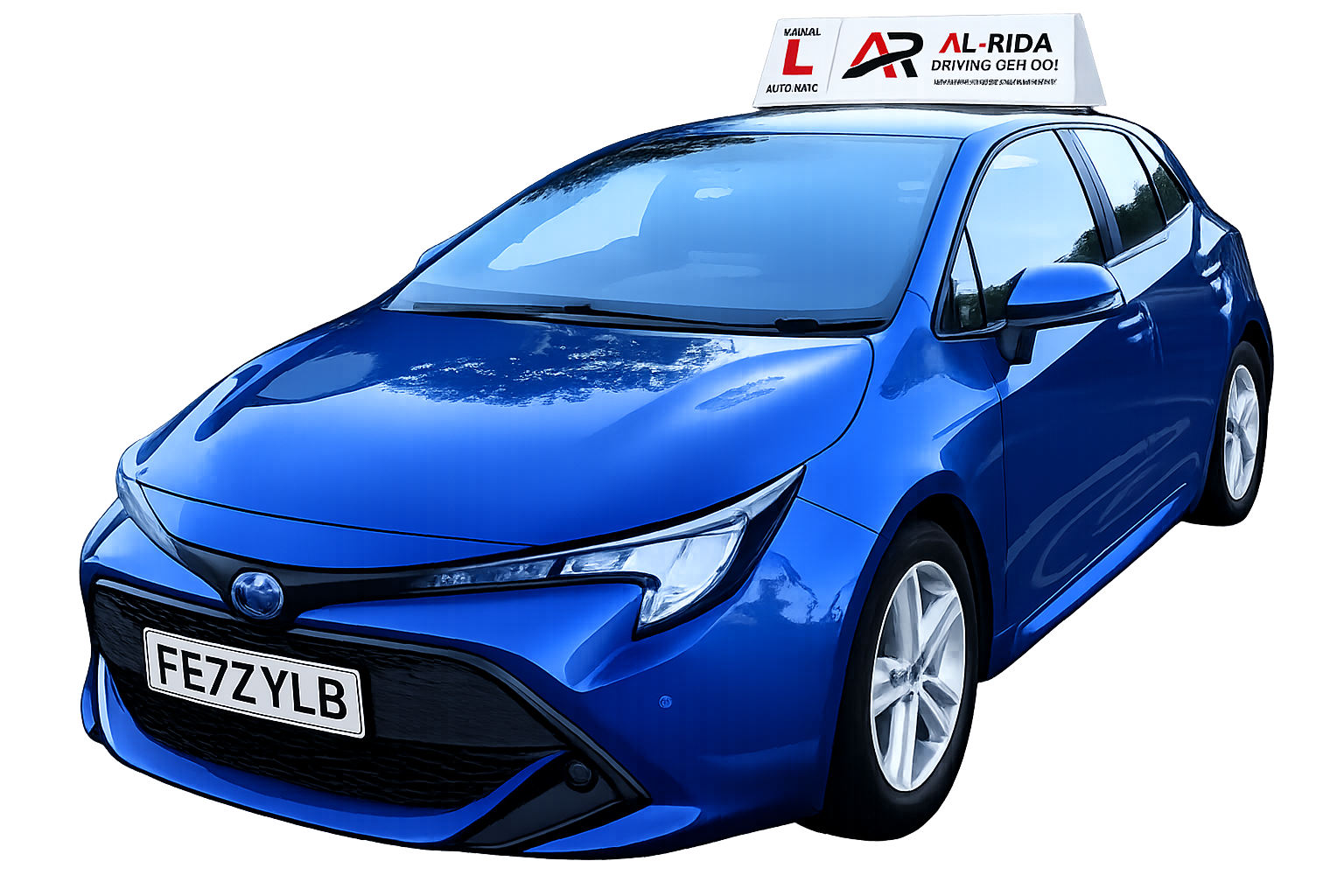
Driving Test Preparation
Show Me Tell Me
Questions
During your practical driving test, the examiner will ask one “tell me” question before you start driving and one “show me” question while you are driving.
Practical Driving Test
Show Me Questions
These questions are usually asked while you are driving, when it is safe to do so.
1. When it’s safe to do so, can you show me how you wash and clean the rear windscreen?
Operate control to wash and wipe windscreen.
2. When it’s safe to do so, can you show me how you wash and clean the front windscreen?
Operate control to wash and wipe windscreen.
3. When it’s safe to do so, can you show me how you’d switch on your dipped headlights?
Operate the dipped headlights control.
4. When it’s safe to do so, can you show me how you’d set the rear demister?
Operate the control to clear the rear windscreen.
5. When it’s safe to do so, can you show me how you’d operate the horn?
Operate the horn control.
6. When it’s safe to do so, can you show me how you’d demist the front windscreen?
Operate the relevant controls to clear the front windscreen.
7. When it’s safe to do so, can you show me how you’d open and close the side window?
Operate the switch to open and close the side window.
Vehicle Safety Checks
Tell Me Questions
These questions are usually asked before you start driving.
1. Tell me how you’d check that the brakes are working before starting a journey.
Brakes should not feel spongy or slack. Brakes should be tested as you set off. The vehicle should not pull to one side.
2. Tell me where you’d find the information for the recommended tyre pressures for this car and how tyre pressures should be checked.
Check the manufacturer’s guide. Use a reliable pressure gauge. Check and adjust pressures when tyres are cold, and remember to refit valve caps.
3. Tell me how you make sure your head restraint is correctly adjusted so it provides the best protection in the event of a crash.
The head restraint should be adjusted so the rigid part is at least as high as the eye or top of the ears, and as close to the back of the head as comfortable.
4. Tell me how you’d check the tyres to ensure that they have sufficient tread depth and that their general condition is safe to use on the road.
There should be no cuts or bulges. There should be at least 1.6mm of tread depth across the central three-quarters of the tyre and around the full outer circumference.
5. Tell me how you’d check that the headlights and tail lights are working.
Explain that you would operate the switch, turn on the ignition if necessary, and walk round the vehicle to check the lights.
6. Tell me how you’d know if there was a problem with your anti-lock braking system.
The ABS warning light should illuminate if there is a fault with the anti-lock braking system.
7. Tell me how you’d check the direction indicators are working.
Explain that you would operate the switch, turn on the ignition if necessary, and walk round the vehicle to check the indicators.
8. Tell me how you’d check the brake lights are working on this car.
Explain that you would operate the brake pedal, make use of reflections in windows or doors, or ask someone to help.
9. Tell me how you’d check the power-assisted steering is working before starting a journey.
If the steering becomes heavy, the system may not be working properly. Gentle pressure on the steering wheel while starting the engine should result in slight movement.
10. Tell me how you’d switch on the rear fog light(s) and explain when you’d use it/them.
Operate the switch, turn on dipped headlights and ignition if necessary, and check the warning light. Use fog lights when visibility is seriously reduced.
11. Tell me how you switch your headlight from dipped to main beam and explain how you’d know the main beam is on.
Operate the switch with ignition or engine on if necessary, and check the main beam warning light.
12. Open the bonnet and tell me how you’d check that the engine has sufficient oil.
Identify the dipstick or oil level indicator and describe checking the oil level against the minimum and maximum markers.
13. Open the bonnet and tell me how you’d check that the engine has sufficient engine coolant.
Identify the high and low level markings on the header tank where fitted, or the radiator filler cap, and describe how to top up to the correct level.
14. Open the bonnet and tell me how you’d check that you have a safe level of hydraulic brake fluid.
Identify the reservoir and check the fluid level against the high and low markings.
Ready for Your Driving Test?
Practise with Al-Rida Driving School.
We can help you prepare for your practical driving test, including safety questions, manoeuvres, road confidence and test-day readiness.